The Department of Juvenile Services' Food and Nutritional Services team assist in learning about nutrition through various traditions such as posters, monthly food menu choices, and other fun activities. We incorporate menu selections and food choices into holidays, celebrations, and special occasions, such as National School Breakfast Week, National School Lunch Week, and National Nutrition Month. Each month, the program focuses on a Food of the Month to serve in the department's residential facility cafeterias. The purpose of the Food of the Month promotion is to highlight the nutritional benefits of healthy eating, wellness, and making health conscious food choices in an adolescent's diet. This food item is chosen based on consideration of the diverse ethnicities, cultures, and the correlation to the traditions of various backgrounds.
Learn more about the
Maryland State Department of Education's School Breakfast Program (SBP) and check out the SBP Fact Sheet from USDA, which provides an overview of the program, eligibility details, nutrition requirements, and other information.
Maryland's Summer Food Service Program (SFSP) provides nutritious meals and snacks to low-income children (ages 18 and under) during June, July, and August when school is not in session. For more information visit the
Maryland Public Schools website to find a site near you.
May's Food of the Month: Strawberries

The Dietary Guidelines and MyPlate promote choosing brightly colored green, red, yellow, and orange fruits and vegetables. Eat a rainbow of fruits and vegetables to get the nutrients your body needs. Strawberries are a delicious way to consume more red produce. With a 91% water content, strawberries are a refreshing and hydrating treat. These bright, juicy berries are loaded with heart- healthy antioxidants along with vitamin C, manganese, folate, and potassium. Add some sliced strawberries to your morning cereal or grab a handful for a light snack. Eating the color red has never been so easy or delicious!
Resources:
Menu for the week of May 3 – May 9, 2026
Download a copy of the menu of the week
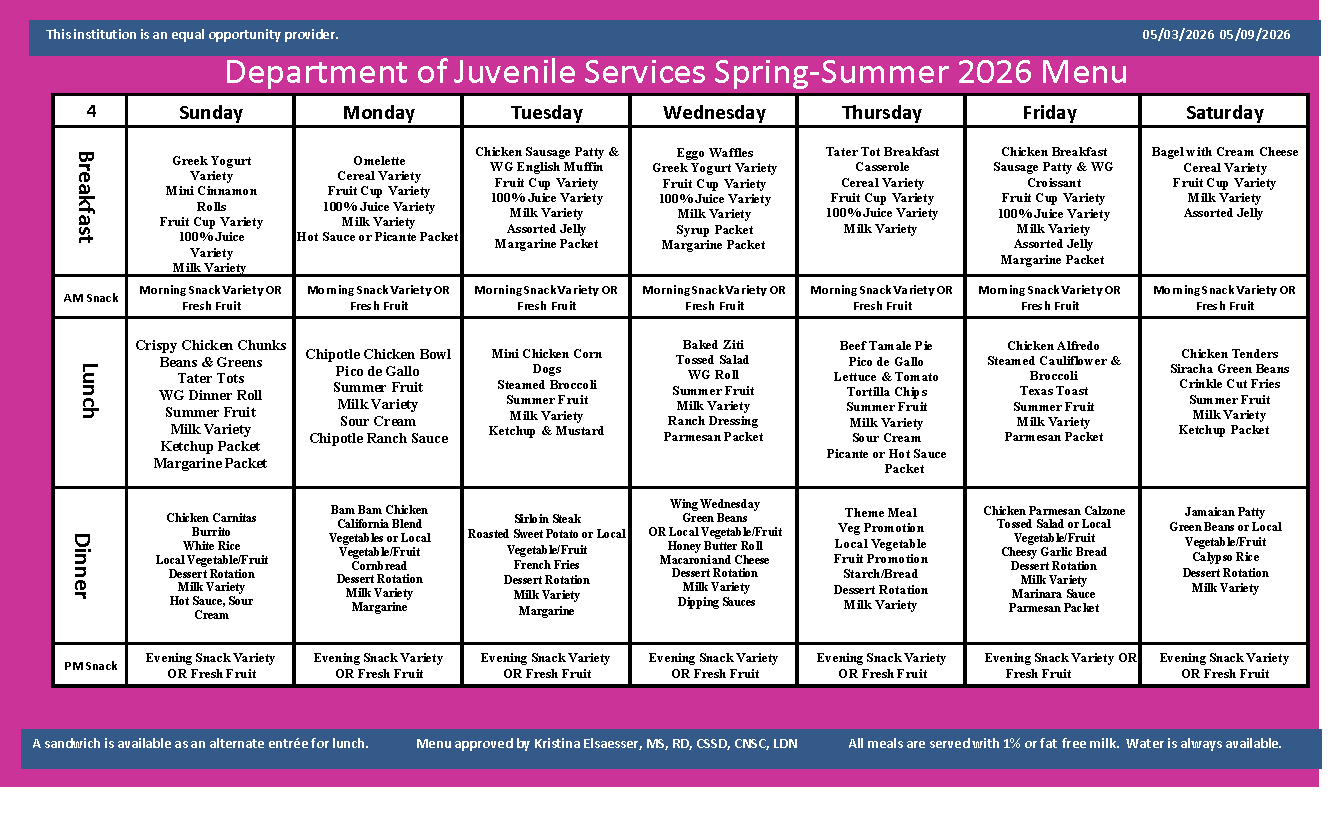
Notes: Milk served will be flavored or unflavored fat-free or 1% white. Fruit juices served will be 100% juice.
Menu for the week of May 10 – May 16, 2026
Download a copy of the menu of the week
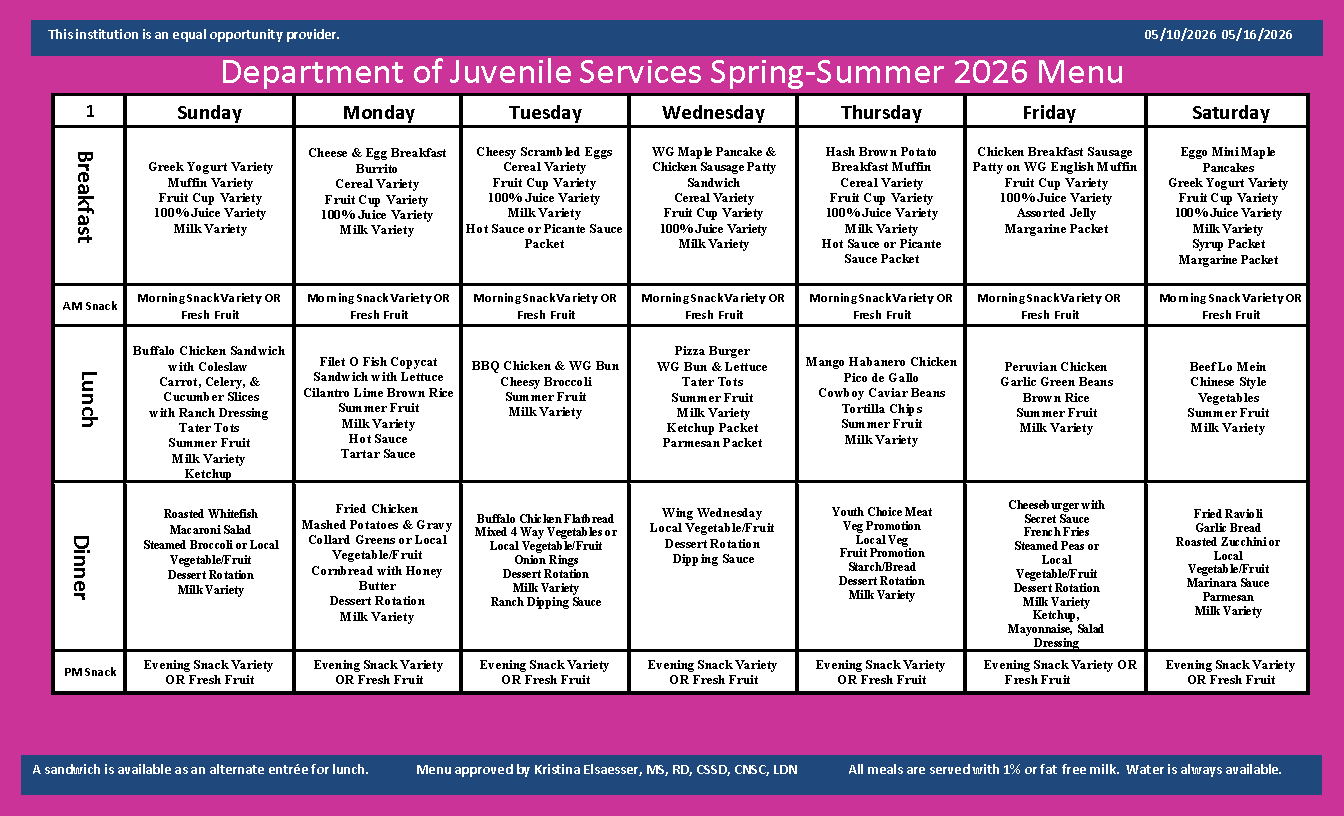
Notes: Milk served will be flavored or unflavored fat-free or 1% white. Fruit juices served will be 100% juice.
Menu for the week of May 17 – May 23, 2026
Download a copy of the menu of the week
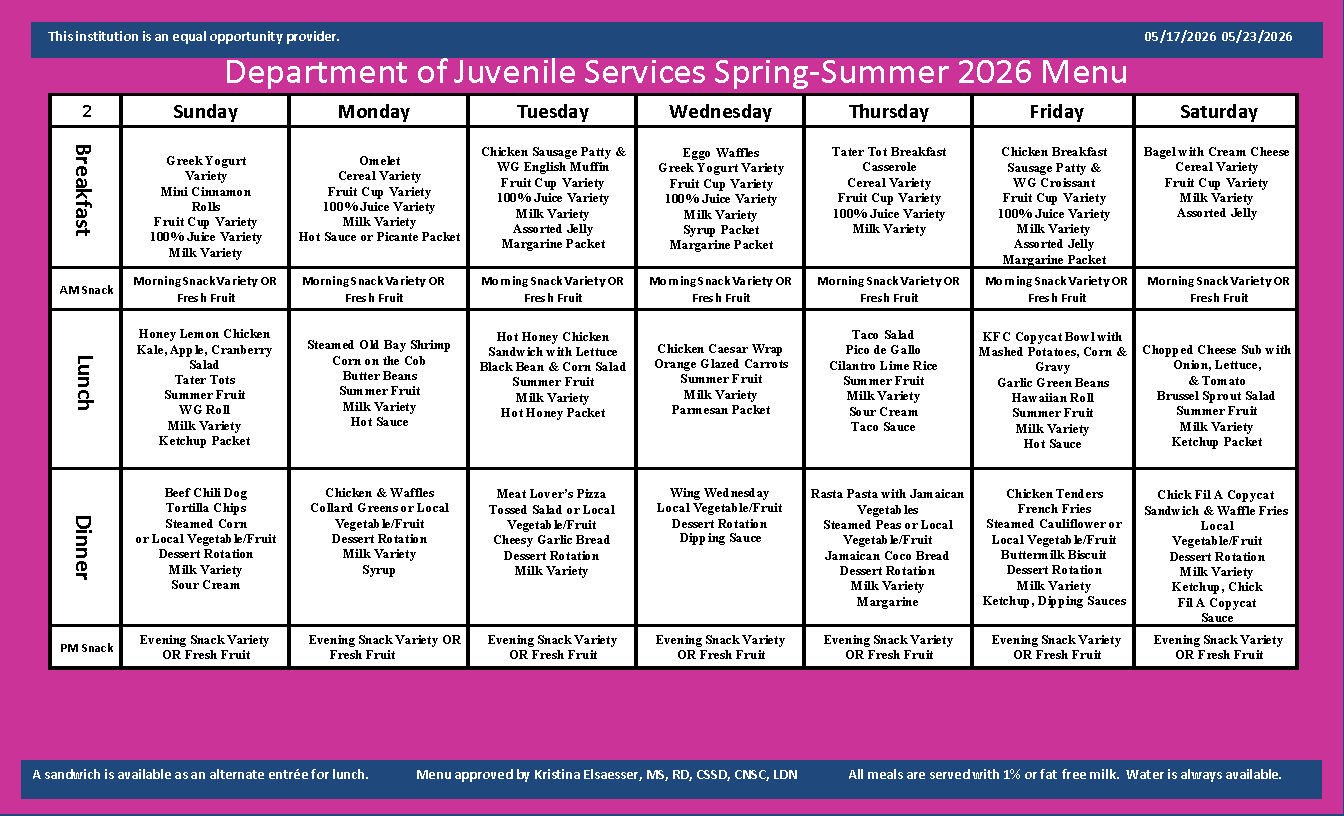
Notes: Milk served will be flavored or unflavored fat-free or 1% white. Fruit juices served will be 100% juice.
Menu for the week of May 24 – May 30, 2026
Download a copy of the menu of the week
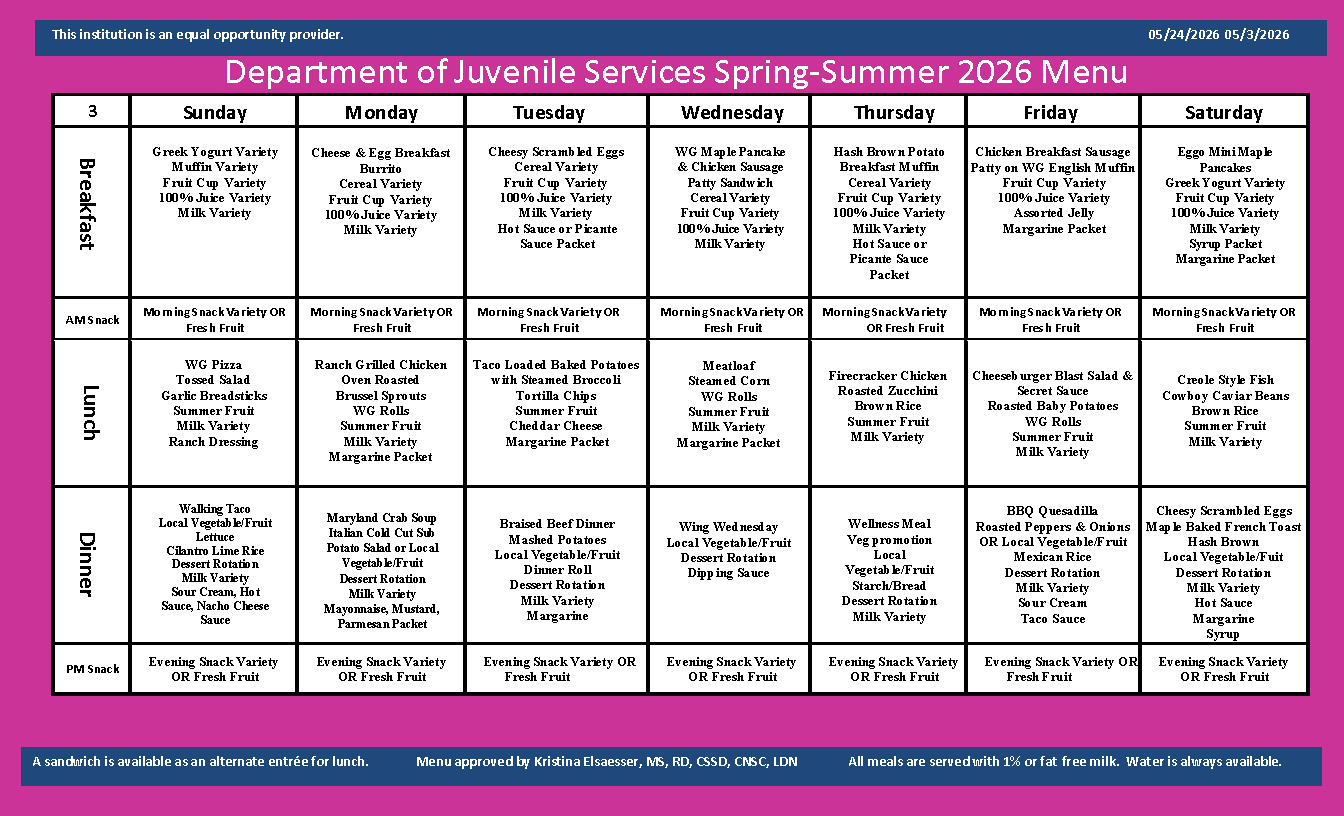
Notes: Milk served will be flavored or unflavored fat-free or 1% white. Fruit juices served will be 100% juice.
Menu for the week of May 31 – June 6, 2026
Download a copy of the menu of the week
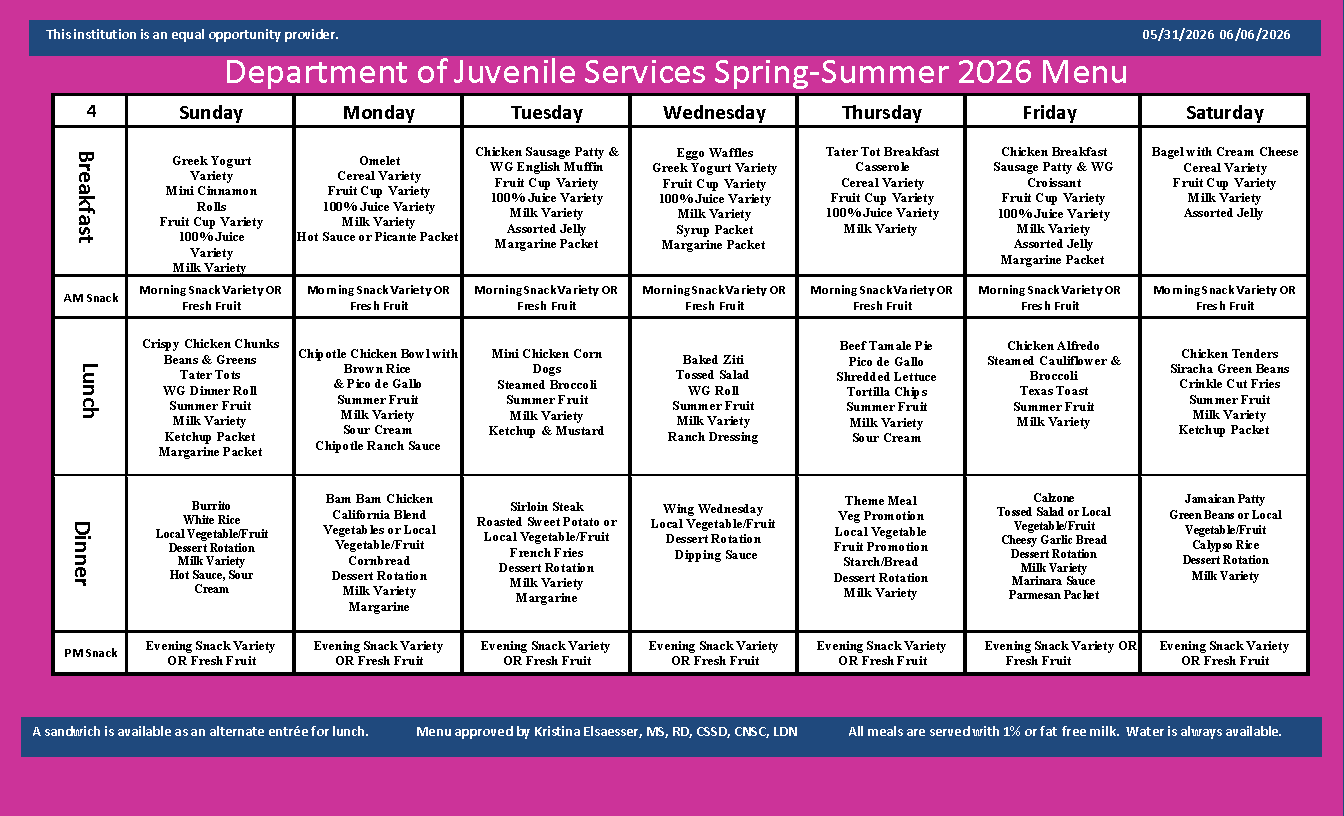
Notes: Milk served will be flavored or unflavored fat-free or 1% white. Fruit juices served will be 100% juice.
Menu for the week of April 26 – May 2, 2026
Download a copy of the menu of the week
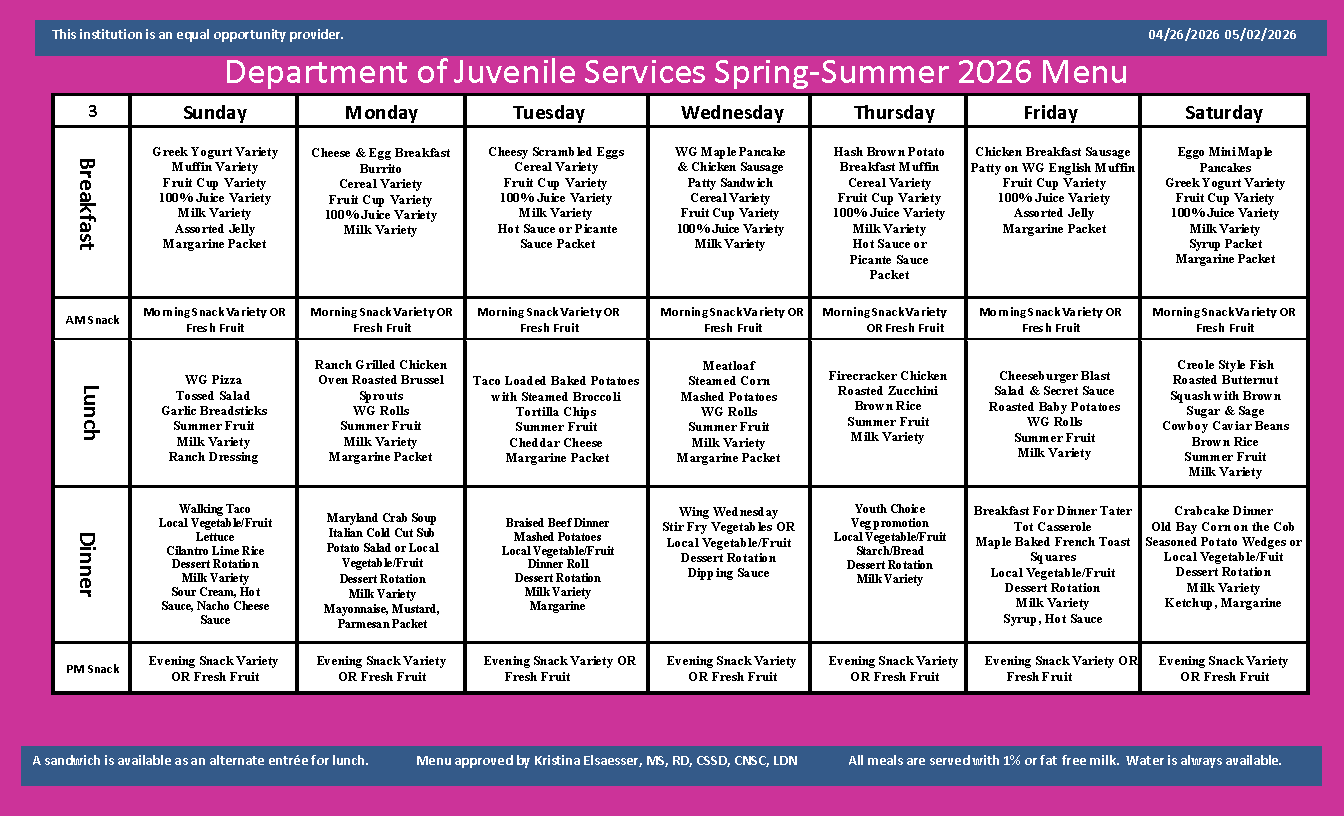
Notes: Milk served will be flavored or unflavored fat-free or 1% white. Fruit juices served will be 100% juice.
Nutrition Information and Policies
